Understanding Erosion and Why It Threatens Residential Properties
Erosion is a natural process that gradually wears away soil and rock through the forces of water, wind, and gravity. While erosion shapes landscapes over millennia, it can become a serious problem for homeowners when left unchecked on residential properties. Losing topsoil means losing the foundation that supports lawns, gardens, driveways, and even building foundations.
Residential erosion often accelerates after construction, grading changes, or removal of vegetation. Without proper ground cover and drainage management, a property can lose significant amounts of soil during heavy rainstorms or prolonged wet seasons. The good news is that effective erosion control methods exist for every budget and property type.
Identifying Erosion Problems on Your Property
Before selecting a control method, it is important to understand where and why erosion is occurring. Common signs of erosion on residential properties include:
- Exposed tree roots that were previously covered by soil
- Gullies or channels forming in the yard after rain events
- Soil buildup against fences, walls, or at the bottom of slopes
- Muddy water pooling near foundations or driveways
- Cracking or shifting of walkways and patios
- Bare patches of soil where grass or plants will not establish
Once you identify the problem areas, you can select the most appropriate control methods for your specific situation. Many properties benefit from a combination of approaches rather than a single solution.
Vegetative Erosion Control Methods
Plants are nature's most effective erosion control tool. Their root systems bind soil particles together while their canopy reduces the impact of raindrops on bare ground.
Ground Cover Plants
Low-growing ground cover plants are excellent for slopes and areas where traditional lawn grass struggles to establish. Species like creeping juniper, vinca, and clover spread quickly and create dense mats of vegetation that hold soil firmly in place. When selecting ground cover, choose species that are well adapted to your climate zone and soil conditions.
For more information about selecting the right ground cover for your region, visit our ground cover selection guide.
Native Grasses and Deep-Rooted Plants
Native grasses offer superior erosion control compared to non-native lawn species because their root systems extend much deeper into the soil profile. While a typical lawn grass may have roots extending six inches deep, native prairie grasses can send roots down several feet. This deep root network creates a stable soil structure that resists even heavy water flow.
Trees and Shrub Plantings
Strategic placement of trees and shrubs helps control erosion in multiple ways. Their canopy intercepts rainfall, reducing the energy of water hitting the ground. Their root systems stabilize soil on slopes, and their leaf litter creates a natural mulch layer that protects the soil surface. Consider planting native species that require minimal maintenance once established.
Structural Erosion Control Solutions
When vegetation alone is not sufficient, structural solutions provide additional stabilization for problem areas.
Retaining Walls
Retaining walls are one of the most effective structural solutions for controlling erosion on steep slopes. They hold soil in place while creating level terraced areas that are easier to manage and maintain. Materials range from natural stone and timber to engineered concrete blocks, each offering different aesthetic and functional qualities.
French Drains and Drainage Solutions
Poor drainage is often the root cause of residential erosion. French drains redirect water away from vulnerable areas by channeling it through gravel-filled trenches to appropriate discharge points. Other drainage solutions include swales, rain gardens, and channel drains that manage water flow across your property.
- French drains work best for subsurface water management
- Surface swales handle overland water flow on gentle slopes
- Rain gardens capture and filter runoff while adding landscape beauty
- Channel drains protect driveways and hardscaped areas
- Downspout extensions direct roof runoff away from foundations
Erosion Control Blankets and Mulching
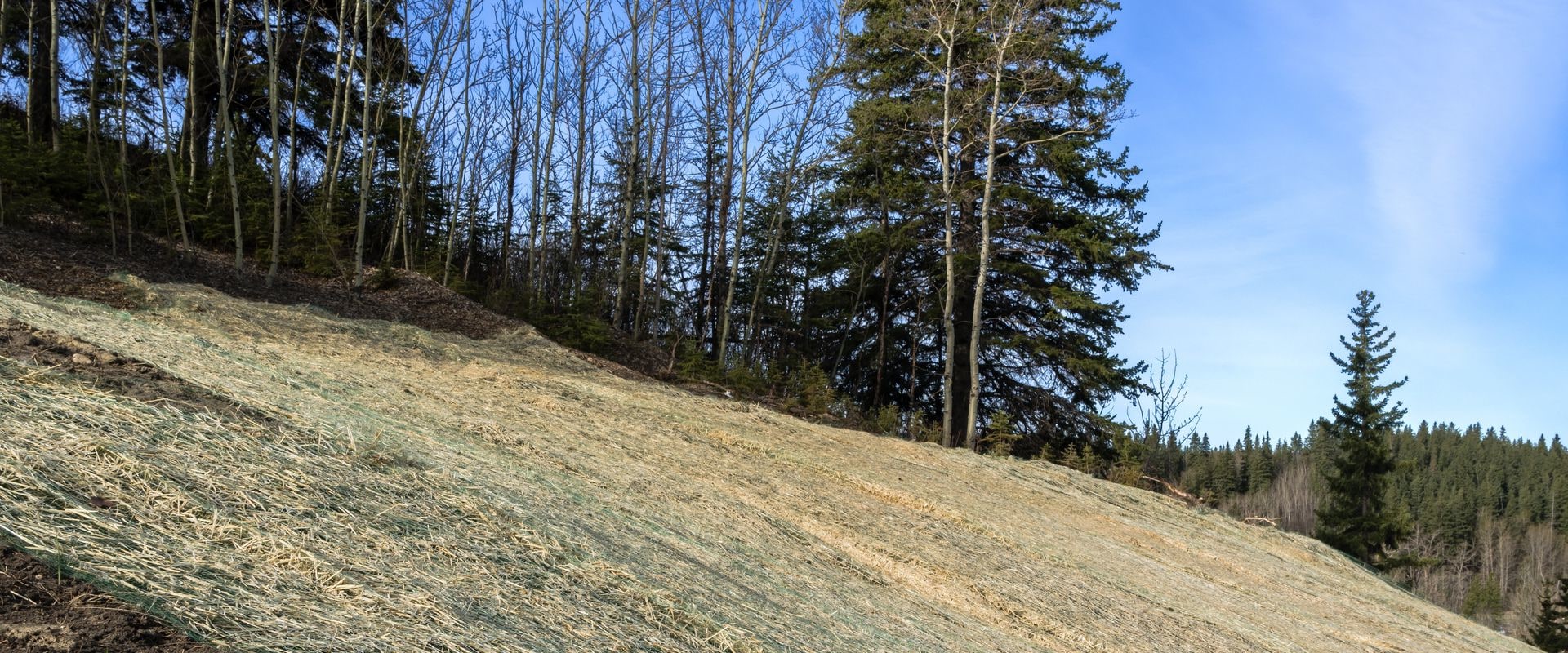
Erosion control blankets provide immediate soil protection while vegetation becomes established. These products are particularly useful on newly graded slopes or construction sites where bare soil is temporarily exposed.
Types of Erosion Control Blankets
Blankets come in various materials including straw, coconut fiber, and synthetic fabrics. Biodegradable options break down naturally over one to three years, providing protection during the critical establishment period for new plantings. Permanent synthetic options are used in high-flow areas where ongoing protection is needed.
Mulch Applications
Organic mulch serves double duty as an erosion control measure and a soil amendment. A layer of wood chips, bark mulch, or shredded leaves three to four inches deep dramatically reduces soil loss from rain impact and surface water flow. Mulch also retains soil moisture, moderates temperature extremes, and adds organic matter as it decomposes.
Learn more about effective mulching techniques in our mulching best practices article.
Riprap and Rock Solutions
In areas with concentrated water flow, rock-based solutions provide durable long-term erosion control. Riprap consists of loose angular stones placed along channels, shorelines, or steep slopes to absorb and redirect water energy. Dry creek beds combine functionality with attractive landscaping by creating natural-looking channels that manage stormwater runoff.
Maintaining Your Erosion Control Measures
No erosion control solution is entirely maintenance-free. Regular inspection and upkeep ensure your measures continue to function effectively over time. Schedule inspections after major storm events and at least twice per year during spring and fall.
- Check for new bare spots or gully formation after heavy rains
- Replenish mulch as it decomposes or washes away
- Maintain vegetation by replacing dead plants promptly
- Clean drainage systems to prevent clogging and overflow
- Inspect retaining walls for shifting, cracking, or leaning
- Address small problems before they become large and expensive repairs
Effective erosion control is an ongoing commitment that protects your property value and the surrounding environment. By combining vegetative, structural, and maintenance strategies, homeowners can successfully manage erosion and enjoy a stable, attractive landscape for years to come. Start by assessing your property and addressing the most critical areas first, then expand your efforts as time and budget allow.